
Writing

United Nations data now (more readily) available

The United Nations has just launched a new web site to house all their data for all you kids out there who wanna crush Hans Rosling. The availability of this sort of information has been a huge problem in the past (Hans’ talks are based on World Bank data that costs real money), and while the U.N. has been pretty good about making things available, a site whose sole purpose is to disseminate usable data is enormous.
Thursday, March 6, 2008 | acquire  
Book

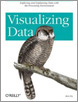
Visualizing Data Book CoverVisualizing Data is my book about computational information design. It covers the path from raw data to how we understand it, detailing how to begin with a set of numbers and produce images or software that lets you view and interact with information. Unlike nearly all books in this field, it is a hands-on guide intended for people who want to learn how to actually build a data visualization.

The text was published by O’Reilly in December 2007 and can be found at Amazon and elsewhere. People who have purchased the book can find the examples here.

The book covers ideas found in my Ph.D. dissertation, which is basis for Chapter 1. The next chapter is an extremely brief introduction to Processing, which is used for the examples. but applies them to a series of examples, first starting with a simple mapping project (Chapter 3) to place data points on a map of the United States. Of course, the idea is not that lots of people want to visualize data for each of 50 states. Instead, it’s a jumping off point for learning how to lay out data spatially.

The chapters that follow cover six more projects, such as salary vs. performance (Chapter 5), zipdecode (Chapter 6), followed by more advanced topics dealing with trees, treemaps, hierarchies, and recursion (Chapter 7), plus graphs and networks (Chapter 8).

This site will be used for follow-up code and writing about related topics.